Same-Game Parlays in NFL Betting: UK Edition
 Available in US
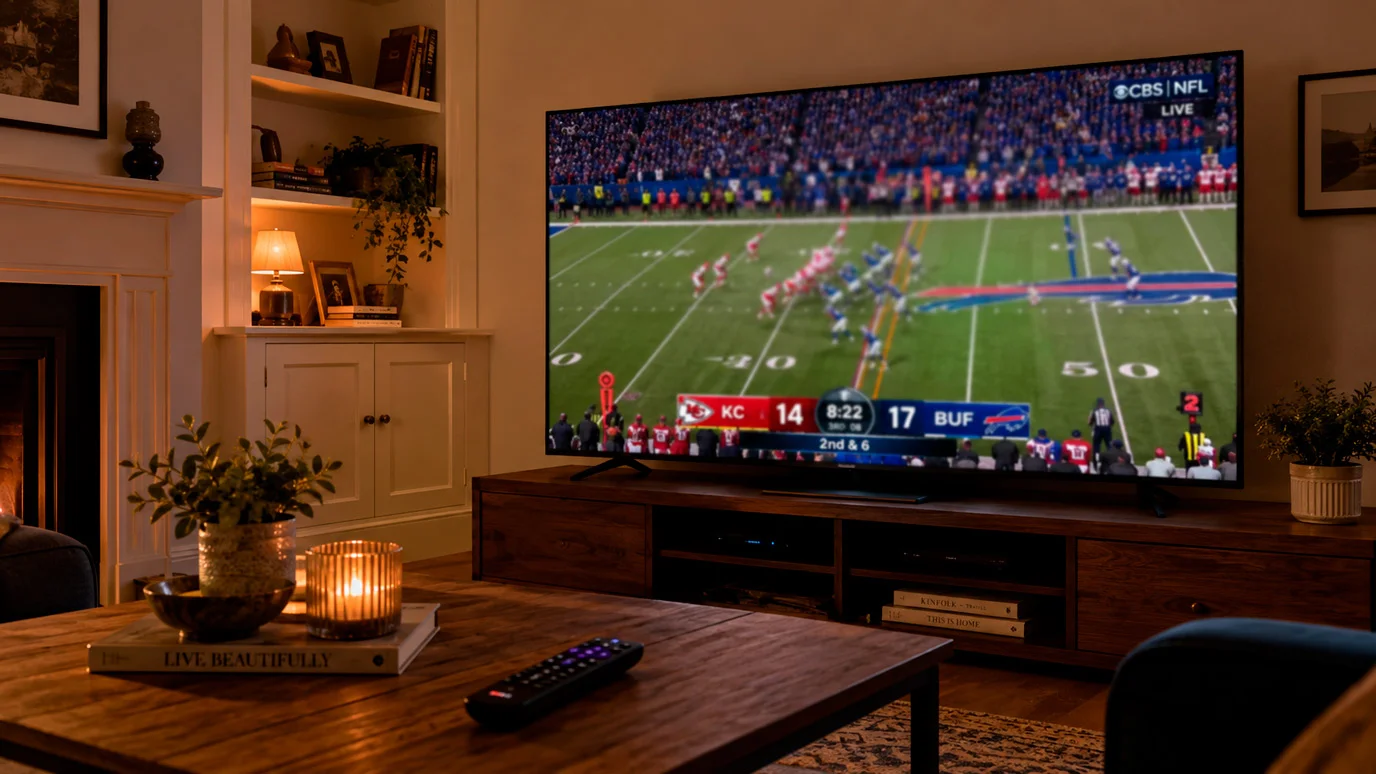
I remember the exact moment I understood why same-game parlays are so profitable — for the bookmaker. It was a Monday Night Football game in 2022. I had combined Jalen Hurts over 225.5 passing yards, the Eagles to win and the total over 47.5. Each selection felt individually strong — Philadelphia were at home, the offence was clicking and the opposing defence was leaking points. The combined odds were 3.2/1. I ran the maths on the independent odds: if I had placed the same three selections as an accumulator from separate games, the combined price would have been 5.1/1. The difference — the 37% discount — was the bookmaker’s correlation adjustment, and it was far more aggressive than the actual statistical correlation warranted.
Same-game parlays, or SGPs, let you combine multiple selections from one NFL fixture into a single bet. They arrived in the UK as an import from the American market, where they have become the fastest-growing product in sports betting. The appeal is genuine: you build a narrative for one game and put money on that narrative happening. The risk is that the pricing structure is opaque, the margins are wide and the correlation maths works against you in ways that standard accumulators do not.
How Same-Game Parlays Work
Think of a same-game parlay as a bet on a story. Not individual outcomes — a story. You are predicting how a game unfolds: which team wins, how many points are scored, which players perform well and in what ways. The bookmaker then prices that story by modelling how likely it is that all the elements happen together.
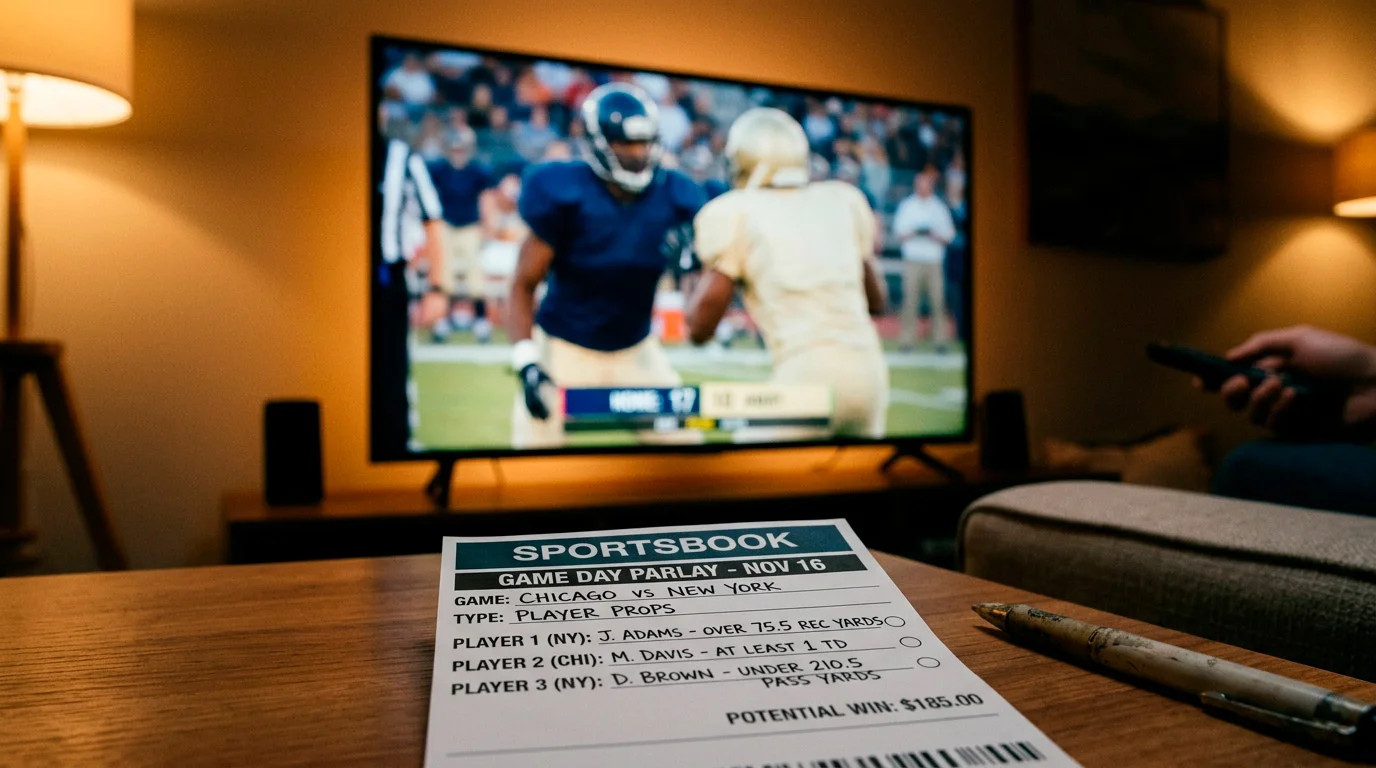
The mechanical process is similar to a bet builder. You select a single game, add two or more selections from within that fixture — match result, total points, player props, team props, half-time result — and the operator calculates combined odds. The minimum is typically two legs, with maximums ranging from six to twelve depending on the bookmaker. Every selection must be compatible: you cannot back both teams to win, and some operators restrict combining certain player props with match results if the correlation is too obvious.
Settlement follows standard bet rules: all legs must win for the bet to pay out. A three-leg SGP where two legs land and one misses is a losing bet. There is no partial payout and, unlike some acca insurance offers on standard accumulators, SGPs rarely qualify for stake-back promotions. The all-or-nothing structure means your selection process must be ruthless — every leg earns its place or gets cut.
The pricing engine behind an SGP is where it differs fundamentally from a standard accumulator. In a multi-game acca, the bookmaker multiplies independent odds because the outcomes of separate games do not influence each other. In an SGP, every outcome shares the same 60-minute contest. A high-scoring game makes quarterback overs more likely, which makes receiving yards overs more likely, which makes touchdown scorer bets more likely. These interdependencies are called correlations, and the bookmaker adjusts the combined odds downward to account for them.
Understanding Correlation Between Legs
Correlation is not a theory in SGP betting. It is the mechanism that determines whether you are getting fair value or being quietly fleeced. Let me walk through a concrete example.
Suppose you want to combine the Kansas City Chiefs moneyline with Travis Kelce over 55.5 receiving yards. These two outcomes are positively correlated — when the Chiefs win, Kelce is highly likely to have exceeded 55.5 receiving yards because the offence needed to function well for the win to happen. If you priced these as independent events and multiplied the odds, you would get a combined price that overstates the true payout because the events are not independent. The bookmaker corrects this by offering lower combined odds, reflecting that both outcomes happening together is more probable than the independent maths would suggest.
Positive correlation between legs reduces your payout relative to what an independent calculation would suggest. The strength of the correlation determines the size of the reduction. A team winning and their quarterback throwing over on passing yards is strongly correlated — the discount is steep. A team winning and the total game points going under is weakly or even negatively correlated — the discount should be minimal or the adjustment should actually increase the combined price.
Here is where UK punters can find an edge. Point spreads remain the preferred bet type for 61% of NFL bettors, and that popularity means spreads are priced most efficiently. But correlation models are proprietary — each bookmaker uses their own — and some models are more accurate than others. An SGP combining a weakly correlated set of outcomes might be underpriced at one operator and fairly priced at another. The only way to identify that discrepancy is to build the same SGP at multiple bookmakers and compare.
I keep a simple rule: if my SGP contains legs that would all benefit from the same game script — say, a blowout by the favourite — I assume the correlation discount is justified and the price is probably fair at best. If my legs reflect a more specific, less obvious story — say, a low-scoring defensive battle where the underdog covers but one specific running back has a big game — the correlation is weaker and the bookmaker’s model is more likely to misprice it. Unusual narratives are where SGP value lives.
Same-Game Parlay vs Bet Builder
The question I get asked most often about SGPs is how they differ from bet builders. The short answer: functionally, they are the same product with different branding. The longer answer involves some important nuances.
Same-game parlay is the American term, popularised by US sportsbooks and imported into the UK market through operator partnerships and cross-Atlantic product development. Bet builder is the British equivalent, developed independently by UK operators before the SGP branding crossed the Atlantic. Both products let you combine multiple selections from one game into a single bet with correlation-adjusted odds.
The differences are in execution, not concept. Some UK operators that offer both a “bet builder” and a “same-game parlay” are using different pricing engines for each — one may have been built in-house while the other was licensed from a third-party provider. When different pricing engines are at work, the combined odds for identical selections can differ. I have seen the same three-leg combination priced at 7/2 through one operator’s bet builder and 4/1 through the same operator’s SGP tab when both products were available side by side. Always check both if the option exists.
Market availability also diverges. Bet builders at UK bookmakers have historically offered deeper coverage of match-level markets — half-time results, correct score, first scoring play — while SGP products sometimes lean more heavily on player props, reflecting their American origins. A punter who wants to combine a correct score with a player prop might find that combination available in the bet builder but not in the SGP tool. The overlap is growing as operators standardise their products, but in 2026 it is still worth checking both interfaces.
From a strategy perspective, treat them identically. The analytical approach — identifying a specific game narrative, selecting legs that reflect that narrative, checking for correlation consistency and comparing prices across operators — applies regardless of whether the button says “Build Bet” or “Same-Game Parlay.” The label is marketing. The maths is the same.
Why are same-game parlay odds lower than a standard accumulator?
Same-game parlay odds account for correlation between selections from the same game. When outcomes are interdependent — such as a team winning and their quarterback exceeding a passing yards line — the combined probability of both occurring is higher than if they were independent events. The bookmaker reduces the odds to reflect this interdependence, which means lower payouts compared to an acca of independent selections with similar individual probabilities.
Can I combine a same-game parlay with other bets?
Some UK bookmakers allow you to add a same-game parlay as one leg of a multi-game accumulator, creating what is sometimes called an SGP+ or a multi-sport acca with an embedded SGP leg. Availability varies by operator, and the margin structure on these combined products tends to be significantly wider than on either product individually.
Which UK bookmakers offer NFL same-game parlays?
Most major UKGC-licensed bookmakers now offer same-game parlay or bet builder functionality for NFL games, though market depth and pricing vary considerably. The largest operators typically provide 60 to 100 combinable markets per NFL fixture, while smaller bookmakers may limit availability to headline markets on primetime games.
Prepared by the Free nfl Bets editorial staff.